🍷 Brief report: Prinz Salm Winery (formerly Prinz zu Salm-Dalberg)
Weingut Prinz Salmis more than just a top winery - it is a living chapter in German wine history. As the oldest family winery in Germany, it combines over 800 years of tradition with the modern, sustainable art of winemaking.
📜 History & location
The winery is based at Wallhausen Castleon the Nahe. Its history is closely linked to the Dalberg family: the oldest known document of an ancestral vineyard estate dates back to 1200 - a "Wingert in Summelachen" (today the Sommerloch site). Since then, the estate has been farmed by the same family in unbroken succession, today in the 32nd generation.
This contemporary witness has passed through several important places:
1150: The family first lived in the built Dalburg, which was enthroned above Dalberg.
1756: After the castle had lost its protective function, the Wallhausen valley castle was converted into a residence and present-day estate.
Today's management: Since 2017, the winery has been run by Felix Prinz zu Salm-Salm and his wife Victoria, who took over from his father Michael in 2017.
🍇 Vineyards & grape varieties
Today, the winery cultivates around 18.5 hectares of vineyards. These are spread over ten hectares in the top locations around Wallhausen on the Nahe (including Wallhäuser Felseneck, Johannisberg, Sommerlocher Steinrossel) and seven hectares in Bingen in Rheinhessen ( Scharlachberg, Kirchberg locations ).
Grape varieties: Riesling is the absolute dominant variety, accounting for an astonishing 75%of the area under cultivation. A wide range of Burgundy varieties (Pinot Gris, Pinot Blanc and Pinot Noir) are also cultivated, supplemented by small proportions of Scheurebe and Merlot.
Soils & geology: The wines are a direct reflection of the unique soil. Green slate dominates in the "Felseneck" parcel , while red slate is found in the "Berg" and Scharlachberg vineyards . In addition, Taunus quartzite and calcareous soils characterise the aromatic complexity of the wines.
Sustainable cultivation: As a pioneer in the region, Prince Michael zu Salm-Salm switched to organic viticulture back in 1988. The winery is also a member of Fair'n Green and works according to the guidelines of the Naturland winegrowers' association .
🌟 Philosophy & specialities
The estate's philosophy combines traditional methods with innovative cellar technology. The wines mature in their own 450-year-old vaulted slatecellar with plenty of time and in balanced coolness.
Classification: The estate is a founding member of the VDP (Association of German Prädikat Wine Estates).
Wine as heritage: Felix Prinz zu Salm-Salm does not see the long-standing, sustainable farming methods as a trend, but as rooted in the family's DNA.
The Prince's bottle: In order to reduce the carbon footprint , the company switched to lightweight glass bottles (less than 420 grams) - an idea that arose from its membership of Fair'n Green.
🏆 Awards
The winery's outstanding work is regularly recognised with high-calibre awards:
Gault&Millau: Awarded 4 grapes (including for the 2021 Johannisberg Riesling).
Eichelmann 2025: The estate's collection was recognised as "the most harmonious collection we have tasted in recent years".
Vinum Wine of the Month: The 2022 Binger Pinot Noir VDP.ERSTE LAGE was named Wine of the Month.
German Sparkling Wine Award 2025: Two awards in the renowned competition organised by Meininger Verlag.
International recognition: The "Two Princes' Riesling" received 91 points from the US Wine & Spirits Magazine back in 2009 .
Summary
The Prinz Salm winery is a fascinating example of how a family business can preserve its identity over the centuries while breaking new ground in terms of sustainability and quality. A visit to Schloss Wallhausen is a journey through the history of German viticulture.

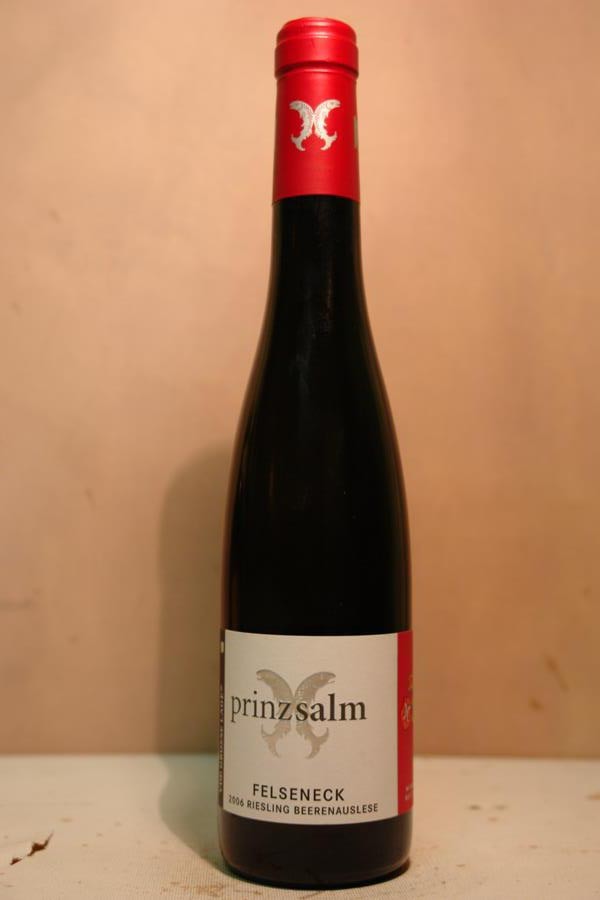
Contents: 0.375 Liter (€130.67* / 1 Liter)

Contents: 0.375 Liter (€333.33* / 1 Liter)

Contents: 0.75 Liter (€166.67* / 1 Liter)
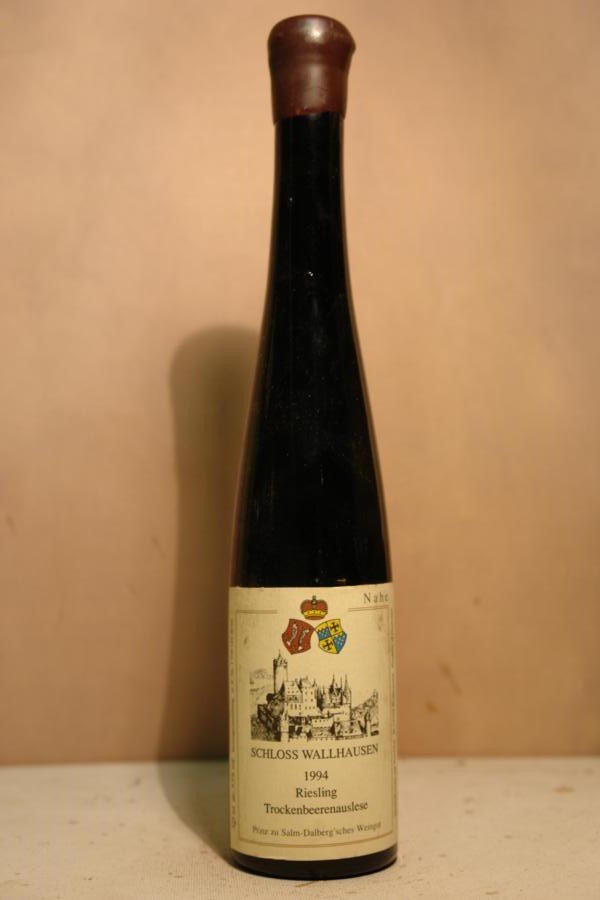
Contents: 0.375 Liter (€226.67* / 1 Liter)