
Over 50,000 bottles in stock Worldwide shipping Express delivery possible !

Product information

Chateau Petrus is the favourite wine of the world's rich and famous. The flagship Pomerol wine is located near Libourne in the Bordeaux wine-growing region. However, the Pomerol wines differ significantly from the 1er Cru Classé growths of the Left Bank such as Chateau Lafite Rothschild, Chateau Latour, Chateau Margaux, Chateau Mouton Rothschild and Chateau Haut Brion from Graves. Chateau Petrus is a fairly small wine estate with only 11.50 hectares of vineyards. This is planted with around 95 per cent Merlot and only 5 per cent Cabernet Franc, which is also the main difference to the above-mentioned wineries; the high proportion of Merlot is typical of Chateau Petrus and the other wineries from the Pomerol region. The Pomerol region is located 30 kilometres north of Bordeaux and only experienced its steady and unstoppable rise at the beginning of the 20th century. To the east of Pomerol, the very well-known Saint-Émilion growing region joins Pomerol. In the years before the so-called discovery of Pomerol wines, glamorous names such as Chateau Petrus or Chateau Le Pin were only known to insiders. In contrast to the wine estates on the Left Bank, the estates do not boast magnificent castles and estates; wine connoisseurs often find ordinary houses or farms when they visit, as is the case with Chateau Petrus. The best Pomerol wines are produced on the highest parts of the plateau because the soil there consists of gravel and clay. Chateau Petrus has the same soil composition and the wines of Pomerol do not have their own classification. Chateau Petrus only received a gold medal at the World Exhibition in Paris in 1878, where the classification of the Bordelais was also announced. The star of Chateau Petrus rose with the 1945 vintage. Alongside the 1945 Chateau Mouton Rothschild, this is still regarded today as the wine of the century. In 1925, part of the property of Chateau Petrus went to Madame Edmond Loubat. in 1949, the enterprising lady was then able to acquire all the shares in Chateau Petrus and call the estate her own. At that time, however, Chateau Petrus was even smaller than it is today, covering only around 6.50 hectares. Also in this year, Jean-Pierre Moueix took over the distribution of the wines of Chateau Petrus and was also able to buy a third of the shares after the death of Mme Loubat in 1961. Today, Chateau Petrus is owned by the Moueix family, long led by the enterprising wine connoisseur and businessman Jean-Pierre Moueix (1882-1957). In addition to Chateau Petrus, he also owned Chateau Trotanoy, Chateau Lafleur-Pétrus and Chateau Lagrange as well as Château Magdelaine in Saint-Émilion. However, Chateau Petrus is his flagship estate with the best reputation and the highest-rated wines. The annual production at Chateau Petrus is usually only around 20,000 to 25,000 bottles, which makes an allocation by subscription almost impossible. Russian oil tycoons and Asian businessmen in particular will pay almost any price for a genuine Chateau Petrus, making older vintages of Chateau Petrus even more difficult to obtain and they are guarded like the apple of their eye. There is probably only one other wine as expensive as Chateau Petrus, and that is the Burgundy legend Domaine Romanee Conti from Vosne-Romanée

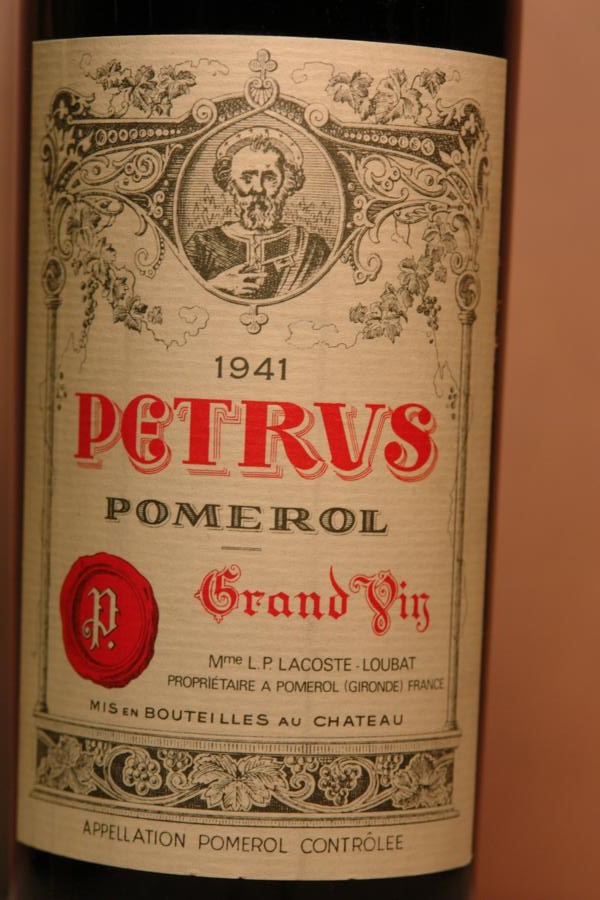
Château Pétrus, Pomerol 1941

The 1941 vintage coincided with the darkest period of the Second World War - an era of occupation, shortages and hardship. Wine production in Bordeaux was extremely difficult: labour was lacking, resources were scarce and many wineries were struggling to survive. At the time, Château Pétrus was owned by the Loubat family, who maintained viticulture with great determination. The 1941 Pétrus was produced under the most adverse circumstances imaginable and is now an extremely rare, almost mythical rarity.

The glass shows a deep amber-brown colour that has darkened considerably over the decades, with clear orange and brown reflections - a sign of extreme maturity. The nose is initially characterised by intense tertiary aromas: Notes of prunes, figs, dates and candied orange peel are dominant. These are joined by strong earthy and spicy accents: truffles, forest floor, leather, tobacco and a hint of truffle oil. A closer look also reveals subtle oxidative notes such as walnut, sherry and caramel, which are not unusual in a wine of this age. The fruit has largely given way to compote and dried fruit flavours.

On the palate, the 1941 Pétrus has a surprisingly soft, almost creamy texture. The tannins are completely broken down - the wine no longer has any tart structure. The acidity is still subtly noticeable, giving it a final, delicate freshness. The concentration is remarkable for the difficult war year, even if the substance cannot keep up with great pre-war vintages such as 1929 or 1945. The wine seems rather fragile, but not disintegrated. The finish is medium-long, warm and characterised by noble roasted aromas, caramel and a hint of cigar box. A hint of bitter almond lingers.

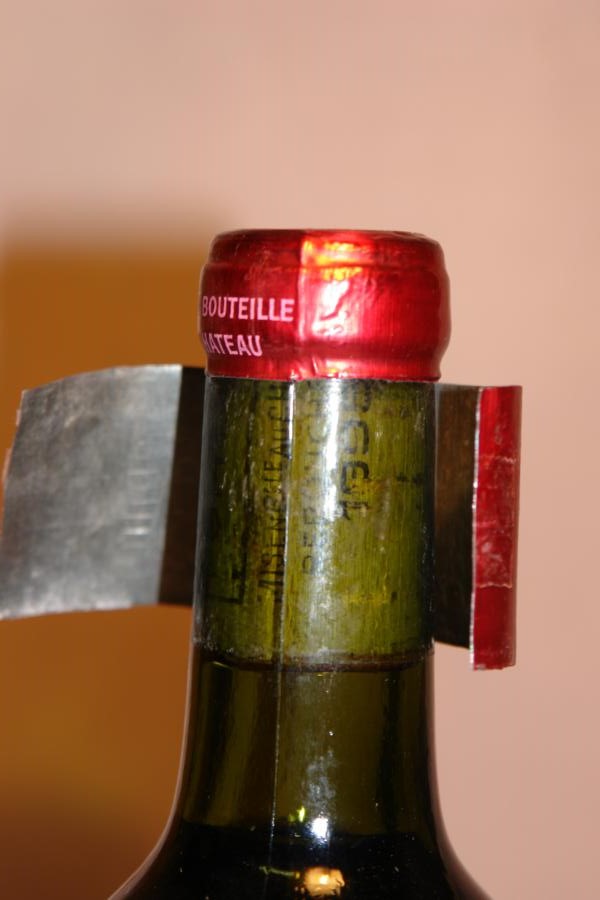
Château Pétrus 1941 is not a wine for the ages - it passed its peak decades ago. Anyone who is lucky enough to open a bottle in perfect condition today will experience less a powerful wine and more a historical artefact: a delicate, oxidative but still fascinating wine. It symbolises the will to survive of a great winery in the darkest of times. Recommendation: Do not decant, just decant carefully to avoid sediment. Serving temperature 16 °C. Enjoy immediately - a piece of living history.
Alcohol Alcohol: 14
Colour Colour: red
Country Country: France
Filling quantity Filling quantity: 750 ml
Flavour Flavour: dry
Grape variety Grape variety: Merlot
Product type Product type: Wine
Region Region: Bordeaux
Type of wine Type of wine: Red wine
Vintage Vintage: 1941
Producer Producer: Château Pétrus

0 of 0 ratings

Average rating of 0 from 5 stars

Rate this product!

Share your experiences with other customers.


Allergens: Sulphites

Bottler: Producer