
Mannochmore – Speyside’s quiet workhorse
The Mannochmore Distillery near Elgin in Speyside, Scotland, is one of Scotland’s newer distilleries. It was built in 1971 by John Haig & Co. on behalf of the Distillers Company Limited. The location was chosen deliberately for practical reasons: Mannochmore was built directly on the site of the neighbouring Glenlossie Distillery, with which it has since formed a close symbiotic relationship. For years, the distilleries shared not only the site but also the workforce, who worked alternately for six months at one and six months at the other distillery.
The history of Mannochmore is characterised by economic constraints. The distillery was designed purely as a ‘workhorse’ to supply malt whisky for the famous Haig and Dimple blends. As early as 1985, during the severe whisky crisis, it had to be closed due to an oversupply on the market. It was not until 1989 that it reopened under its new owner, United Distillers, which later became Diageo. Further brief closures followed in the 1990s, before production was able to resume year-round from 2007 onwards.
Fora long time, Mannochmore whisky was used almost exclusively in blends . It was not until 1992, with the launch of the famous Flora & Fauna series, that the first official single malt bottling was released: the 12-year-old Mannochmore. This Speyside malt captivates with its light, floral and surprisingly dry character, featuring notes of citrus, malt and vanilla.
The distillery became notorious in the 1990s for ‘Loch Dhu’ – an almost black whisky, whose name translates from Gaelic as ‘black loch’. Its almost opaque colour was the result of the casks being double-charred. The flavour was just as unusual as the colour, and the whisky was quickly withdrawn from the market – today it is a sought-after rarity.
Today, Mannochmore belongs to the global conglomerate Diageo. With an annual production capacity of up to six million litres and eight stills , it is a quiet but indispensable part of the Diageo empire. The distillery has no visitor centre and is not open to the public – it remains a fascinating hidden gem for connoisseurs who appreciate the distinctive character of this light yet robust Speyside malt.

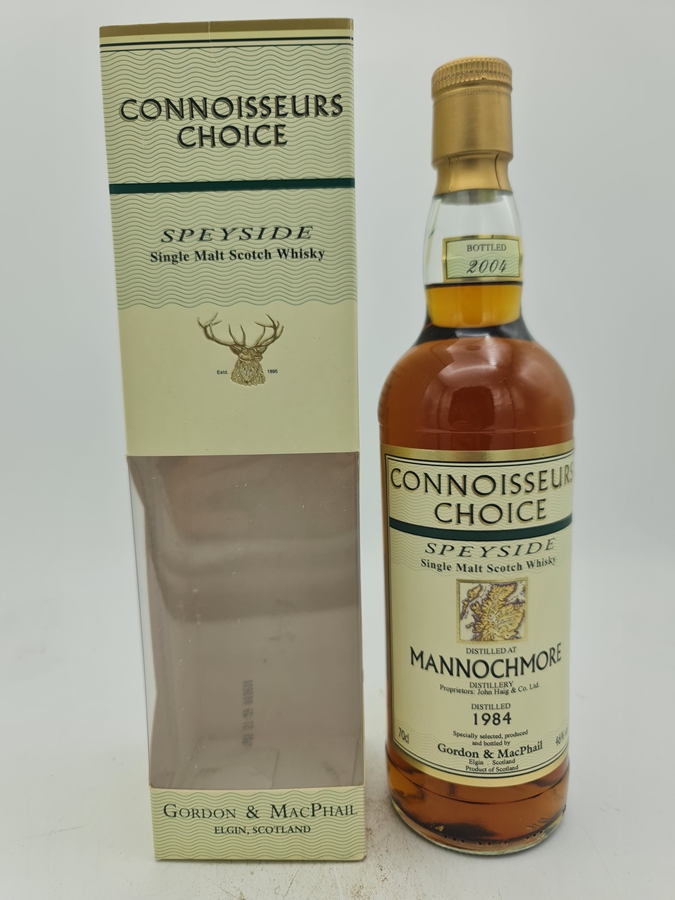
Contents: 0.75 Liter (€366.67* / 1 Liter)