Bischöfliches Konvikt Trier Winery: Ecclesiastical heritage and the art of winemaking on the Moselle
The Episcopal Seminary in Trier looks back on a remarkable history that is deeply interwoven with the wine culture of the Moselle, Saar and Ruwer. It was founded in 1840 as an ecclesiastical educational institution for prospective priests. Its vineyard holdings, which trace their origins to extensive endowments and donations, now comprise around 37 hectares of vineyards, stretching across famous sites such as the Piesporter Goldtröpfchen on the Moselle, the Ayler Kupp on the Saar and the Eitelsbacher Marienholz on the Ruwer.
A decisive turning point in the estate’s history came in 1966, when the Episcopal Seminary, together with the vineyards of the Episcopal (founded in 1773) and the Cathedral (founded in 1851) to formthe ‘Administration of the Episcopal Vineyards of Trier’. This merger brought together centuries-old expertise and first-class vineyard plots under one roof. Today, the estate cultivates around 95 hectares of vineyards, including shares in some of the region’s most prestigious sites, such as the Scharzhofberger and the Kanzemer Altenberg.
At the heart of the range, accounting for just under 90 per cent of the vineyard area ,is the Rieslinggrape variety , complemented by Burgundy varieties such as Pinot Blanc and Pinot Noir. The vines thrive on the slate soils characteristic of the region, which lend the wines their delicate minerality and freshness . In the cellar, cellar master Stefan Kraml relies on traditional craftsmanship: slow fermentation, natural yeasts and ageing in large oak barrels, the typical ‘Fuderfässer’. The result is wines of great finesse and character, ranging from fruit-driven estate wines through to precise single-vineyard Rieslings and rare sweet wines.
The Bischöfliches Konvikt and its sister estates remain inextricably linked to the Diocese of Trier to this day and are among the Moselle’s most influential producers. They uniquely combine spiritual heritage, historic premium vineyards and contemporary winemaking to produce characterful wines with an unmistakable regional identity.


Contents: 0.75 Liter (€92.00* / 1 Liter)

Contents: 0.75 Liter (€113.33* / 1 Liter)

Contents: 0.75 Liter (€366.67* / 1 Liter)

Contents: 0.75 Liter (€92.00* / 1 Liter)
Contents: 0.75 Liter (€92.00* / 1 Liter)

Contents: 0.75 Liter (€100.00* / 1 Liter)

Contents: 0.75 Liter (€860.00* / 1 Liter)

Contents: 0.375 Liter (€920.00* / 1 Liter)
Contents: 0.375 Liter (€253.33* / 1 Liter)

Contents: 0.75 Liter (€500.00* / 1 Liter)

Contents: 0.75 Liter (€593.33* / 1 Liter)

Contents: 0.75 Liter (€92.00* / 1 Liter)

Contents: 0.75 Liter (€100.00* / 1 Liter)
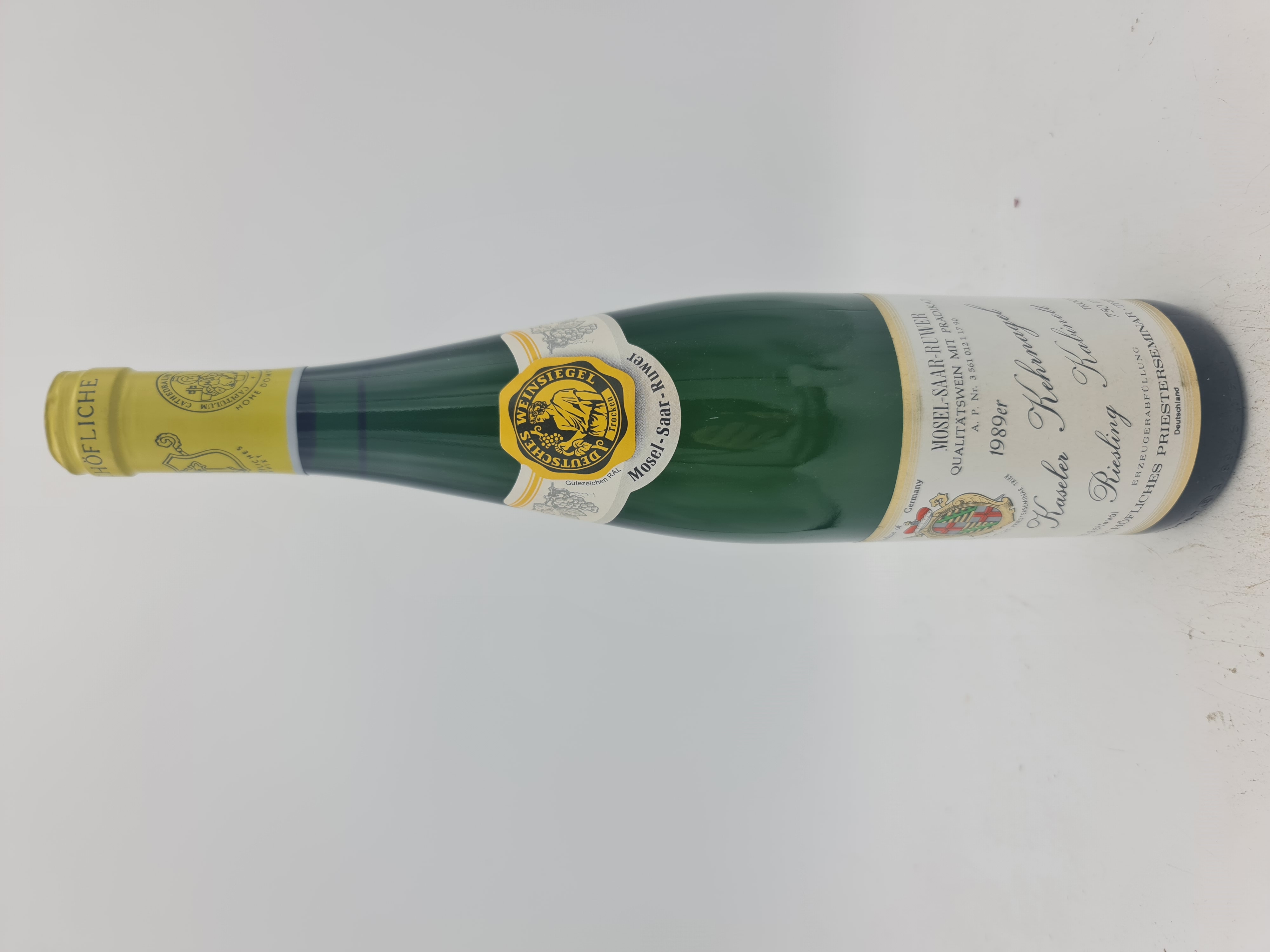
Contents: 0.75 Liter (€78.67* / 1 Liter)