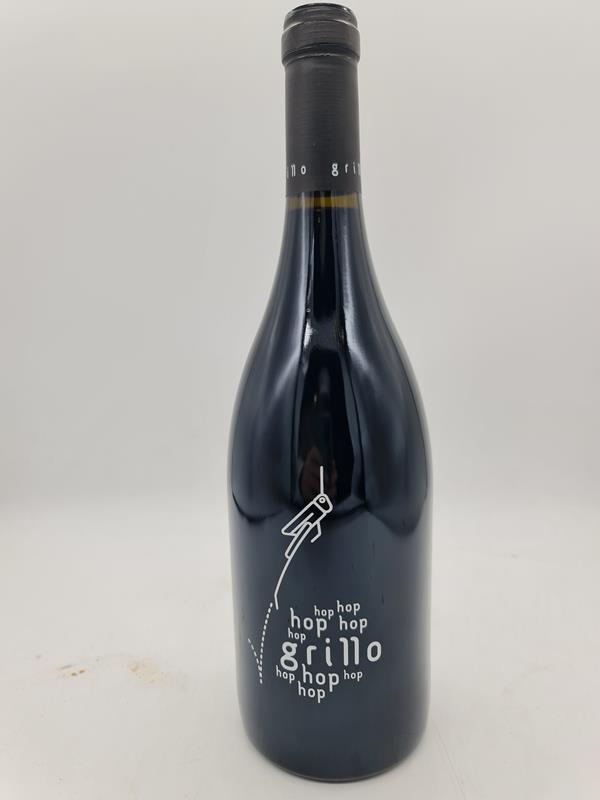
Bodega El Grillo y La Luna 'Hop Hop' 2010
1. Introduction and philosophical context
Whilst the previous report focused on one of the world’s most expensive and prestigious Cabernets, the Bodega El Grillo y La Luna ‘Hop Hop’ 2010takes us into a completely different, yet no less fascinating, world of wine: the biodynamic authenticity of the D.O. La Mancha in central Spain.
The winery is based in Las Mesas (province of Cuenca) and was founded by a passionate team of winemakers led by Jesús Fernández. The name says it all: ‘El Grillo’ (the cricket) represents the nocturnal life in the vineyard and the sounds of nature, whilst ‘La Luna’ (the moon) symbolises the strict biodynamic working calendars followed here. The curious name ‘Hop Hop’
– which means ‘hop, hop’ – alludes not only to the
crickets’ hopping but also to the lively, fresh and bouncy
fruitiness that the wine promised in its youth.
This
wine is the antithesis of the heavy, oak-dominated world of
Napa Valley: purist, terroir-driven and with a clear
commitment to sustainability. The 2010 vintage is now (as of 2026) a 16-year-old example
of a wine originally conceived to be enjoyed young – an
exciting test of the ageing potential of biodynamic wines in the
mid-range category.
2. The year 2010 in La Mancha – weather and the growing cycle
In Castile-La Mancha, 2010 was a vintage of contrasts, though it is generally regarded as a very goodyear for the Cencibel (Tempranillo) grape variety.
Winter & Spring:
An unusually cold and snowy winter ensured
excellent water retention in the deep soils. Spring
was changeable with light late frosts, which, however, caused no major damage in the high-altitude
terroir of Las Mesas (approx. 700 m above sea level)
as air circulation was good.
Summer: The summer of 2010 was typically continental – hot during the day, but with sharp drops in temperature at night
(often a difference of over 15 °C). These extreme temperature variations are
key to preserving the acidity of the Cencibel grape. There was no
extreme heat stress; thanks to the soil moisture carried over from
winter, the vines were able to ripen evenly.
Harvest period (September/October):
September brought dry, sunny days with cool nights, which
favoured slow, complete phenolic ripening. The harvest
generally took place in the third week of September – ideal for
fresh yet concentrated fruit flavours.
Conclusion for the 2010 vintage:
A vintage with excellent natural acidity, moderate alcohol (approx.
13.5–14.0 per cent) and fine, rounded tannins. For a wine in this
price range, an above-average foundation.
3. The vineyard and the terroir – The soul of La Mancha
The vineyards of El Grillo y La Luna are situated at an altitude ofaround 700 to 750 metres on the Castilian plateau. The terroir differs fundamentally from that of French or Californian plots:
Soil: The soil is predominantly calcareous, sandy loam
with a high proportion of active limestone and pebbles. Although these soils
are low in nutrients, they force the vines to develop deep root systems.
The high limestone content imparts a natural freshness and a slightly
salty, mineral touch to the wine.
Climate:
A strictly continental climate with extremely hot summers and very cold
winters. The high altitude tempers the heat somewhat and ensures the
cool nights mentioned earlier, which are essential for the development of the
Cencibel’s aromas.
Cultivation: The bodega operates biodynamically
(Demeter-certified) and relies on natural ground cover between the
vines to promote soil vitality and prevent erosion
. Chemical pesticides and synthetic fertilisers are
completely banned.
4. The Grapes and Vinification (Technical Details)
‘Hop Hop’ is a single-varietal wine that reflects the indigenous spirit of La Mancha.
Grape variety: 100% Cencibel
(the local name for Tempranillo). The vines are between
20 and 35 years old, which, compared to Spain’s ancient vines, is
considered middle-aged, but offers good root depth
for this entry-level wine.
Yield: Deliberately kept low (approx. 40–45 hectolitres per hectare) to promote concentration.
Vinification:
Fermentation: The grapes are harvested by hand and destemmed following rigorous sorting. Alcoholic fermentation takes place using natural, indigenous yeasts in stainless-steel tanks at controlled temperatures (approx. 25–28 °C) to preserve the fruity esters.
Maceration:
Approximately 15 to 20 days with gentle submersion of the cap (delestage) to
ensure gentle extraction of colour and soft tannins.
Ageing: The key factor: the wine was aged for 6 months in barriques
(a blend of French and American oak, with the
proportion of new barrels at under 20 per cent). This short ageing period serves
solely to add structure and integrate subtle vanilla and
toasty notes – it is by no means intended to mask the primary fruit.
Filtration: The wine was only lightly filtered to preserve its texture.
5. Sensory description – as of 2026 (16 years after harvest)
Here,
one must be honest: an entry-level wine (often classified as ‘Vino de Mesa’ or
simply a DO wine) is not normally intended for a
16-year journey in the cellar. The 2010 ‘Hop Hop’ is now a wine of advanced age, having moved far beyond its youthful raspberry freshness. It now reveals its autumnal, earthy side.
Colour:
Medium to light garnet red with distinctly pronounced brick-red and orange hues
at the rim. The colour intensity has diminished, which is typical of a
matured Tempranillo that has not undergone excessive extraction.
It is clear, but shows the first signs of oxidative influence.
Nose (bouquet):
The nose is no longer exuberantly fruity, but rather closed and earthy-spicy. After half an hour in the glass (please decant!):
Tertiary aromas: Dried figs, prunes, leather, tobacco leaf and a hint of sous-bois (forest floor, mushrooms).
Secondary aromas: Subtle vanilla and a delicate hint of liquorice, derived from the barrique ageing.
The
original primary aromas (fresh cherry, blackberry) have
largely faded – if at all, only in the form of a reduced compote.
A slight animal note: in the finest tradition of old Tempranillos, a subtle, leathery spiciness emerges.
Palate (On the palate):
The attack is surprisingly soft and already low intannins
– the tannins have been completely smoothed out. The acidity is still
present, but no longer as crisp as in its younger years; it still underpins the
wine, but seems slightly flattened. The body is
medium-bodied, almost slender. The fruit has clearly
receded into the background; instead, earthy aromas, a hint of
dark chocolate and a slightly balsamic (herbal) finishdominate .
Finish:
Medium-length,
warm and with a pleasant, though not overwhelming, spiciness. The
wine reveals its origins here – the chalky soil lends a slight,
salty minerality to the finish.
6. Reviews and Awards (Retrospective)
In its early years, the ‘Hop Hop’ received a thoroughly positive response for its price range:
Guía Peñín (Spain’s leading wine guide): 88/100 points (on release). Praise was given for the “clean fruit, lively acidity and good value for money”.
Robert Parker (The Wine Advocate):
The 2010 vintage received around 87 points. Parker described it as
“an honest, outrageously drinkable Tempranillo with a hint of
vanilla, which pairs perfectly with everyday Spanish cuisine”.
James Suckling: Around 88 points, with the advice that it should be drunk within the next 3–5 years.
Important:
The wine was never intended to achieve top marks, but rather to offer
authenticity and drinking pleasure. The old ratings are now only of
historical interest – the wine’s current condition differs significantly from its
youthful ratings.
7. Ageing potential and drinking window (as of 2026)
Youth phase (2011–2016): Fruity, juicy, almost ‘bouncy’ (hence the name). The ideal time to enjoy this wine.
Maturation phase (2017–2022): The fruit begins to dry out; the oak and tertiary aromas come to the fore. The wine becomes more serious but loses some of its freshness.
Current state (2026): The end of the drinking window has been reached. Anyone who still has this wine in their cellar should open it immediately
. It has not ‘gone off’ (i.e. it is not vinegary or
undrinkable), but it is in a slow decline. The fruit has
faded, and the structure is barely holding up.
Decanting recommendation: Given its age , careful decanting is advisable
to separate the inevitable sediment (deposit). Allow it 20–30
minutes to breathe, but not too long, otherwise the last
delicate aromas will evaporate.
8. Food pairings
The 2010 is no longer a powerhouse, but rather an elegant dining companion for rustic, earthy cuisine:
Cheese: Manchego (preferably matured) – a classic regional pairing that perfectly complements the wine’s earthy character.
Meat: Roast lamb or kid (traditional Spanish ‘cordero asado’), braised beef cheeks (‘carrillada’) with mashed potato.
Sausages: Mild chorizo or salami with a hint of paprika.
Vegetarian: Grilled aubergines or mushroom risotto (porcini, king oyster mushrooms).
(Take care with fish or light-coloured sauces – the wine’s oxidative character is too dominant for these.)
9. Market situation and collector’s value
This is where this wine differs fundamentally from the Dominus Estate: the ‘Hop Hop’ 2010 is an everyday wine ( available at the time for around 20euros from specialist retailers). Even today, 16 years later, little has changed in this regard.
Current market value:
Provided it is still available on the market at all (mostly remaining stock or
auctions for rarity hunters), the price ranges between 30and 50 euros per bottle.
Availability:
Hard to find, as the vintages from El Grillo y La Luna are usually
drunk within 3–5 years. Anyone who owns a bottle
is more likely to have a curiosity or a forgotten bottle from their cellar.
Conclusion on value: This is not a wine investment, but a living historical record
of Spain’s biodynamic movement from a decade and a half ago. The
ideal wine for a curious blind tasting evening on the theme ‘What
happens to a simple Tempranillo after 15+ years?’
10. Conclusion and overall verdict
The Bodega El Grillo y La Luna ‘Hop Hop’ 2010
is a fascinating subject of study for any wine lover. It impressively demonstrates
that even simple, biodynamically produced wines
, when stored well ,have a significantly longer lifespan than the price tag would suggest.
However, it must be made clear: this wine is no longer at its peak.
Its former ‘bouncy’ freshness has given way to a deep, autumnal, almost
melancholic character of ageing. Anyone opening it now
should do so with the right expectations – not in
search of powerful fruit, but in search of earthiness, leather, tobacco and the gentle charm of an old, honest red wine.
Final assessment (as of 2026):
Drinking window: The wine has passed its peak; drink it now (2026/2027) – or never.
Shelflife: No further ageing recommended.
Value for money: A bargain for lovers of old wines; a waste of money for fruit enthusiasts.
Conclusion:
An honest, down-to-earth wine which, at 16 years old, has swapped its youthful
carefree spirit for the wisdom of age –
certainly not perfect, but absolutely authentic. A glass for
those who romanticise Spain and terroir enthusiasts! Salud!